
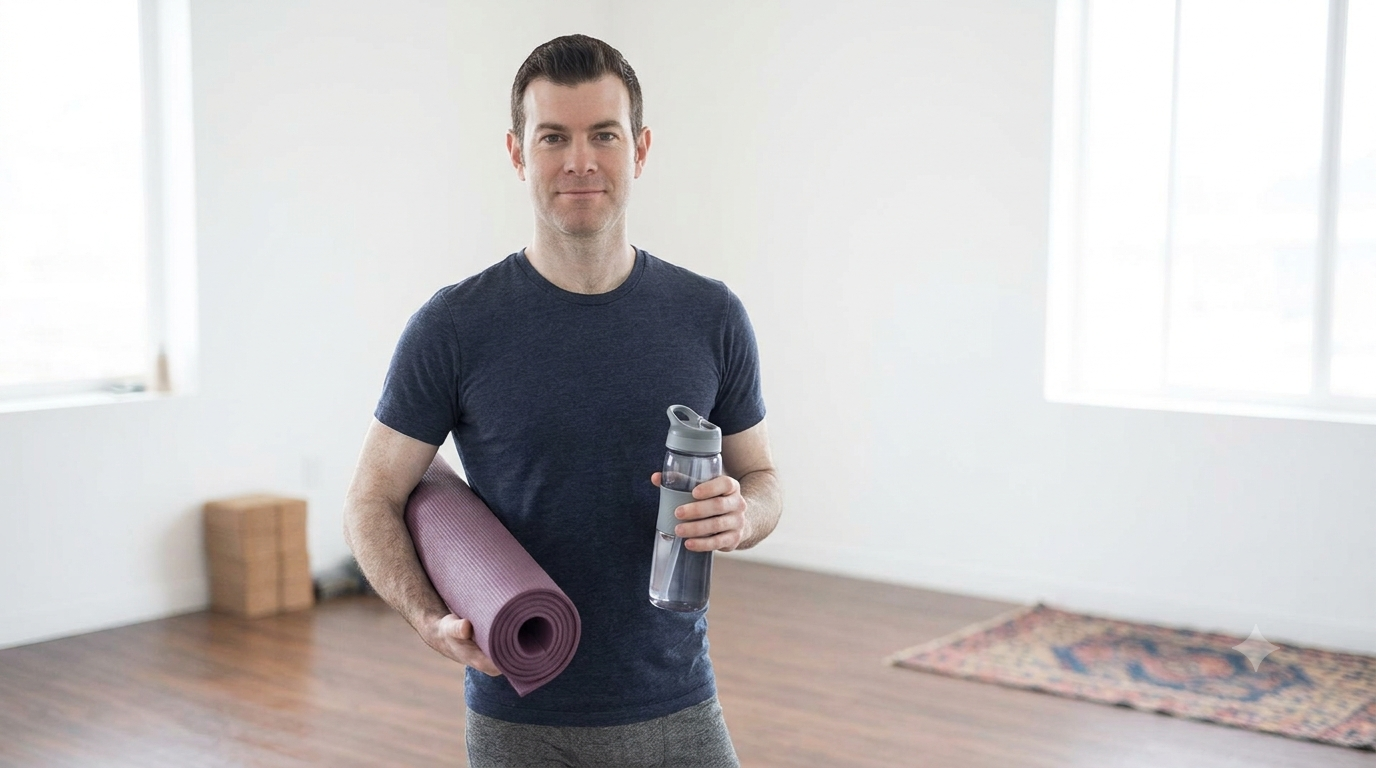
When people think about yoga, they often imagine meditation or complicated poses that require a lot of flexibility.
But yoga doesn’t have to be complicated.
For men who exercise regularly, play sports, or spend long hours at a desk, yoga can be a great addition to an active lifestyle. Research has shown that yoga may also help reduce stress and support a healthier, more positive mood. The best part? You don’t need to be flexible to start. In fact, flexibility is something you can gradually develop with regular practice.
The goal is not to make an impressive looking positions. It’s to learn how to move with control, pay attention to how your body feels, and build a practice that complements the other things you already do.
Here are 10 yoga poses worth learning if you’re a beginner.
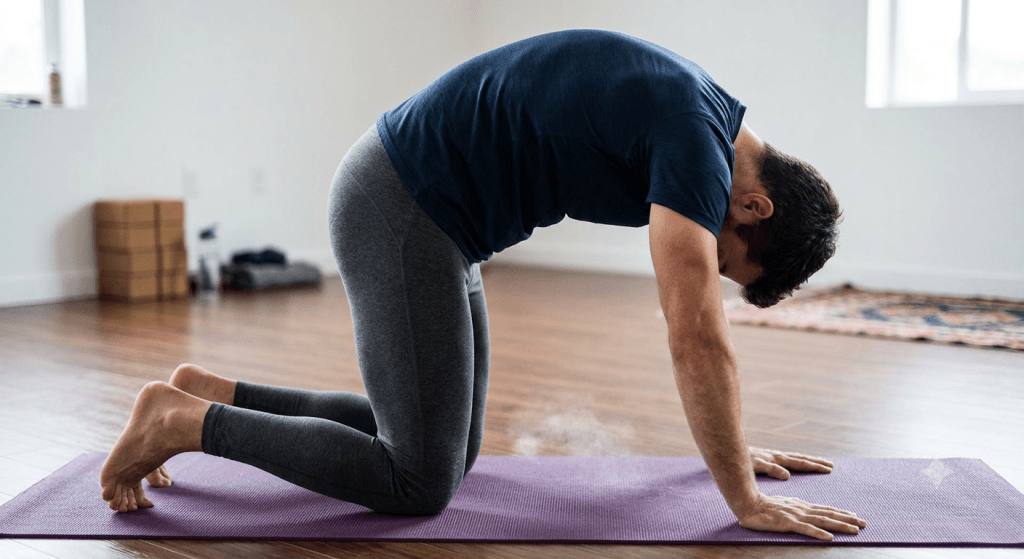
1. Cat – Cow Pose
Cat – Cow is a simple movement that can be used to gently warm up the spine and prepare the body for a yoga session.
How to do it
Start on your hands and knees with your hands underneath your shoulders and your knees underneath your hips.
Slowly move between two positions:
- As you inhale, gently lift your chest and tailbone.
- As you exhale, round your back comfortably.
- Continue slowly for several repetitions.
Don’t try to create an exaggerated movement. Focus on smooth, controlled motion.
Why include it?
It’s an easy way to begin a session and become more aware of movement through your spine.
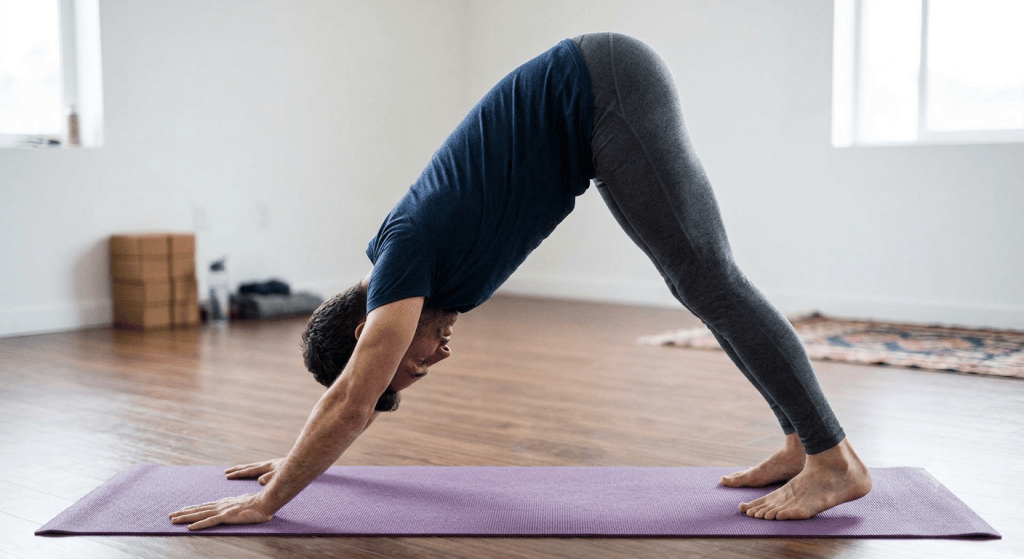
2. Downward – Facing Dog
Downward – Facing Dog is one of the best yoga poses and appears in many styles of yoga.
It involves your arms, shoulders, back and legs while requiring you to maintain a stable position.
How to do it
Start on your hands and knees.
- Push your hips upward and backward while gradually straightening your legs as much as feels comfortable.
- Keep your hands firmly grounded and avoid forcing your heels toward the floor.
- Your knees can remain slightly bent.
Don’t worry about whether your heels touch the floor. The quality of the position matters more than achieving a particular shape.
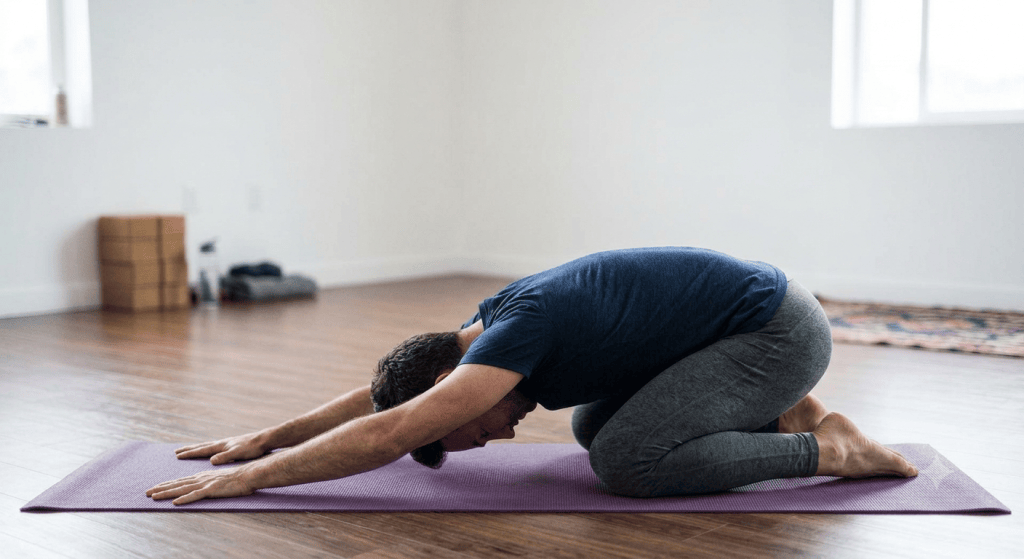
3. Child’s Pose
Child’s Pose is a simple yoga position that can be useful between more active movements.
How to do it
- From a kneeling position, sit your hips back toward your heels and extend your arms forward.
- Lower your torso comfortably toward the floor.
If the position doesn’t feel comfortable, adjust your knees or use a cushion for support.
Why include it?
It provides an easy opportunity to slow down and breathe during a session.
4. Low Lunge
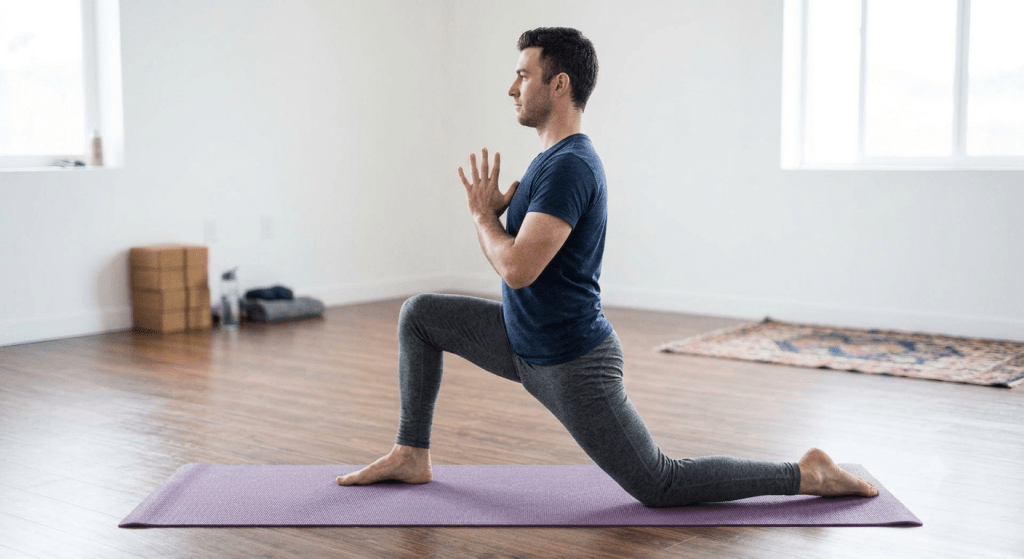
If you spend much of your day sitting, a gentle lunge can be a useful movement to include in the routine.
How to do it
- Foot forward between your hands.
- Place your other knee on the floor behind you.
- Keep your front foot stable and maintain a comfortable upright position.
- Don’t force your hips downward.
- Repeat on the other side.
If your balance is uncertain, use a wall or other stable support nearby.

5. Warrior II
Warrior II is a standing pose that challenges balance while involving the legs, hips and upper body.
How to do it
- Stand with your feet apart.
- Turn one foot outward and bend the corresponding knee while keeping the other leg extended.
- Extend your arms in opposite directions.
- Keep your movements controlled and your front knee comfortable.
- Hold the position while breathing steadily, then repeat on the other side.
Why include it?
It combines standing stability, balance and controlled movement.
6. Triangle Pose
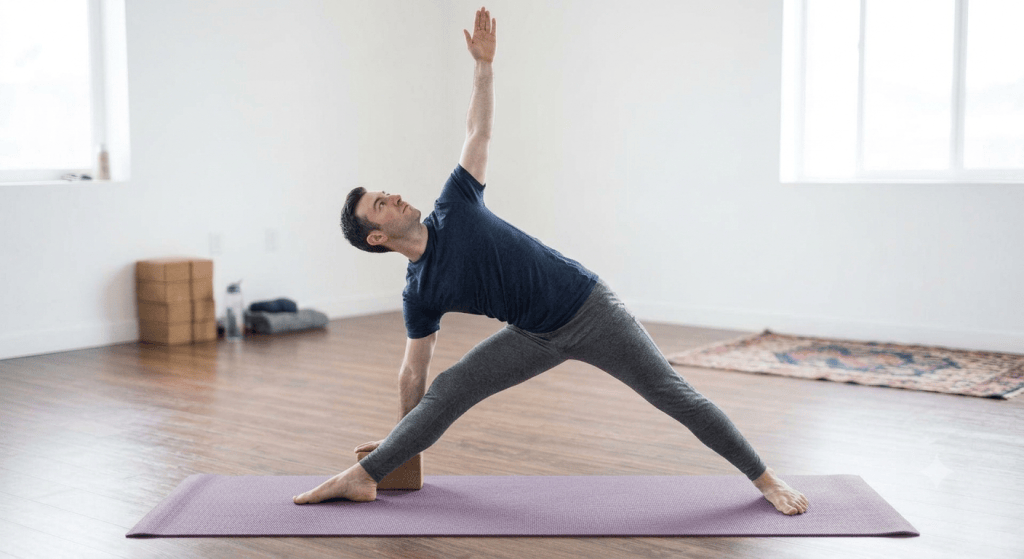
Triangle Pose introduces a standing side-bending movement while requiring you to maintain a stable base.
How to do it
- Start in a wide-legged standing position.
- Turn one foot outward.
- Extend your arms and slowly lean toward the front leg.
- Place your lower hand on your shin, a yoga block or another comfortable support.
- Extend the opposite arm upward if that feels comfortable.
Don’t force yourself to reach the floor. Using a block can make the pose much more accessible.
7. Bridge Pose
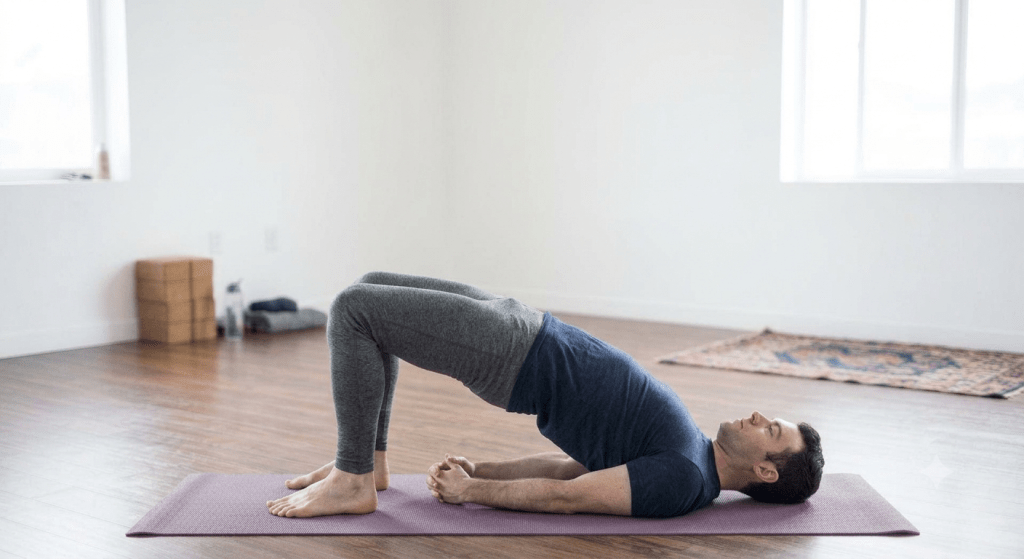
Bridge Pose is performed on your back and involves lifting the hips while keeping your feet grounded.
How to do it
- Lie on your back with your knees bent and feet comfortably positioned on the floor.
- Keep your arms alongside your body.
- Press through your feet and gently lift your hips.
- Pause briefly, then lower yourself with control.
Start with a small range of movement rather than trying to lift as high as possible.
8. Seated Forward Fold
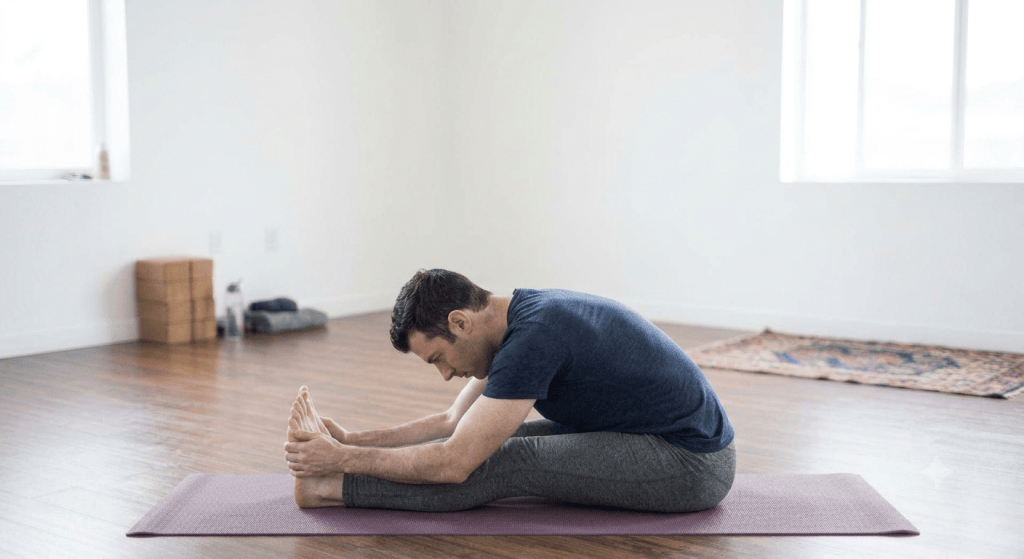
This seated position can be used as part of a gentle flexibility focused routine.
How to do it
- Sit with your legs extended in front of you.
- Keep your spine comfortable and slowly lean forward from your hips.
- Reach toward your legs only as far as feels comfortable.
- You don’t need to touch your toes.
Don’t force the stretch. Yoga should not be a competition to see how far you can reach.

9. Cobra Pose
Cobra Pose is a gentle back extension movement commonly used in yoga sequences.
How to do it
- Lie on your stomach.
- Place your hands near your shoulders.
- Using your back and arms in a controlled way, gently lift your chest.
- Keep the movement comfortable and avoid forcing your lower back.
You don’t need to straighten your arms completely. A smaller movement may be more appropriate when you’re learning.
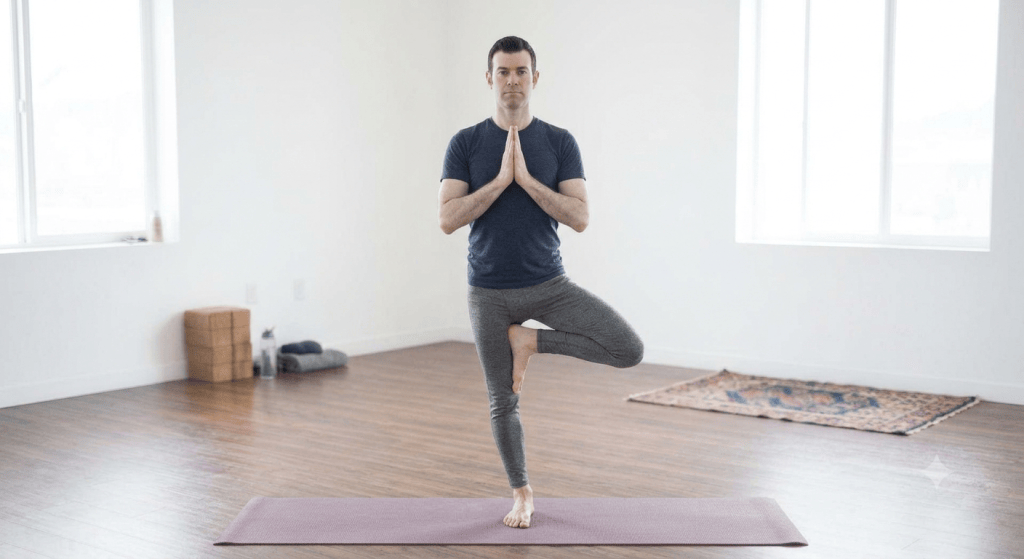
10. Tree Pose
Tree Pose is a simple balance exercise that can make a yoga session more challenging without requiring complicated movements.
How to do it
- Stand upright.
- Shift your weight onto one foot.
- Place the other foot against the inside of your supporting leg at a comfortable height.
- Bring your hands together or extend your arms.
- Focus on a stationary point in front of you.
- Repeat on the other side.
If you can’t balance, that’s completely fine. Stand near a wall and use it for support while you’re learning.
How to Combine These Poses Into a Beginner Routine
A simple routine could look like this:
Warm-up
- Cat – Cow
- Child’s Pose
Standing sequence
- Downward – Facing Dog
- Low Lunge
- Warrior II
- Triangle Pose
Floor sequence
- Bridge Pose
- Seated Forward Fold
- Cobra Pose
Finish
- Tree Pose
- A few minutes of relaxed breathing
Remember to move slowly and focus on comfortable, controlled positions rather than trying to make the routine as difficult as possible.
Yoga and Strength Training Can Work Together
If you already lift weights, run, cycle or play sports, you don’t necessarily have to choose between those activities and yoga.
They all serve different purposes.
Strength training focuses on developing strength and physical capacity. Yoga on the other hand can add controlled movement, balance, mobility work and relaxation.
The combination can therefore fit naturally into a broader active lifestyle.
5 Common Mistakes Men Make When Starting Yoga
1. Trying to Be Flexible Immediately
You don’t need to be flexible before starting yoga. Treat flexibility as something that can develop gradually.
2. Comparing Yourself With Other People
Someone who has practiced yoga for years will probably look very different from someone starting with their first session.
That’s normal. Focus on your own movement rather than trying to copy someone else’s range of motion.
3. Forcing a Pose
More intense doesn’t automatically mean better.
If a movement causes pain, stop and modify it rather than trying to push through it.
NCCIH advises beginners to start slowly, choose practices appropriate for their level and avoid pushing beyond their comfort level.
4. Trying Advanced Poses Too Soon
Headstands, shoulder stands and other advanced practices aren’t where a beginner needs to start. Build your fundamentals first.
5. Treating Yoga Like a Competition
Yoga isn’t about who can touch their toes first. It’s about developing control, awareness and consistency.
How Often Should You Practice?
A beginner could start with short and comfortable sessions and gradually develop a routine that fits their lifestyle.
Remember being consistent is better than doing one very hard session and then giving up. Find a schedule you can realistically maintain.
You might practice:
- Before starting your day
- After a workout
- On a recovery day
- During a break from desk work
- Before bed as part of a relaxing routine
Is Yoga Safe for Beginners?
That should not be even a question. Yoga is considered safe for healthy people when practiced appropriately, but like other physical activities, it can cause injuries. Sprains and strains are among the more common yoga related injuries.
A few simple principles can help:
- Start with beginner level movements.
- Don’t force a position.
- Stop if you experience pain.
- Learn proper technique.
- Consider working with a qualified instructor when you’re new.
- Modify movements when necessary.
People with existing injuries or certain health conditions may need to modify or avoid particular poses, so professional medical guidance may be appropriate before starting.
The Brazevoo Take
Yoga doesn’t need to become your entire fitness routine.
You don’t have to give up lifting weights, running, playing sports or simply going for walks.
Instead, think of yoga as another tool in your lifestyle toolkit.
A few controlled movements can give you time to slow down, pay attention to your body and step away from the constant rush of everyday life.
And perhaps that’s the biggest reason to give it a try.
You don’t need to become a yoga expert. You just need to start moving with intention.
Final Word
Being fit isn’t only about how much you can lift or how fast you can run.
An active lifestyle also includes mobility, balance, recovery, relaxation and taking care of yourself.
Yoga can be one way to bring some of those elements together.
Start simple. Move comfortably. Stay consistent.
And remember: the goal isn’t to force your body into a pose. The goal is to learn how to move better.
Disclaimer
This article is for general informational purposes only and is not medical advice. If you have an injury, medical condition, or concerns about starting a new exercise routine, consult a qualified healthcare professional.
Leave a Reply